Mobile tool and mower sharpening business idea for 2026
Want more practical business ideas for the US market?
👉 Follow us on Facebook for daily ideas and tips.
👉 Save ideas on Pinterest — or get them by email.
Turn idea into action
Calculate a business plan for this idea
Log in to generate a plan from this idea. We will reuse the article's niche and context; you only add your market location.
Log in to calculateThe Growing Demand for At-Home Repair Services
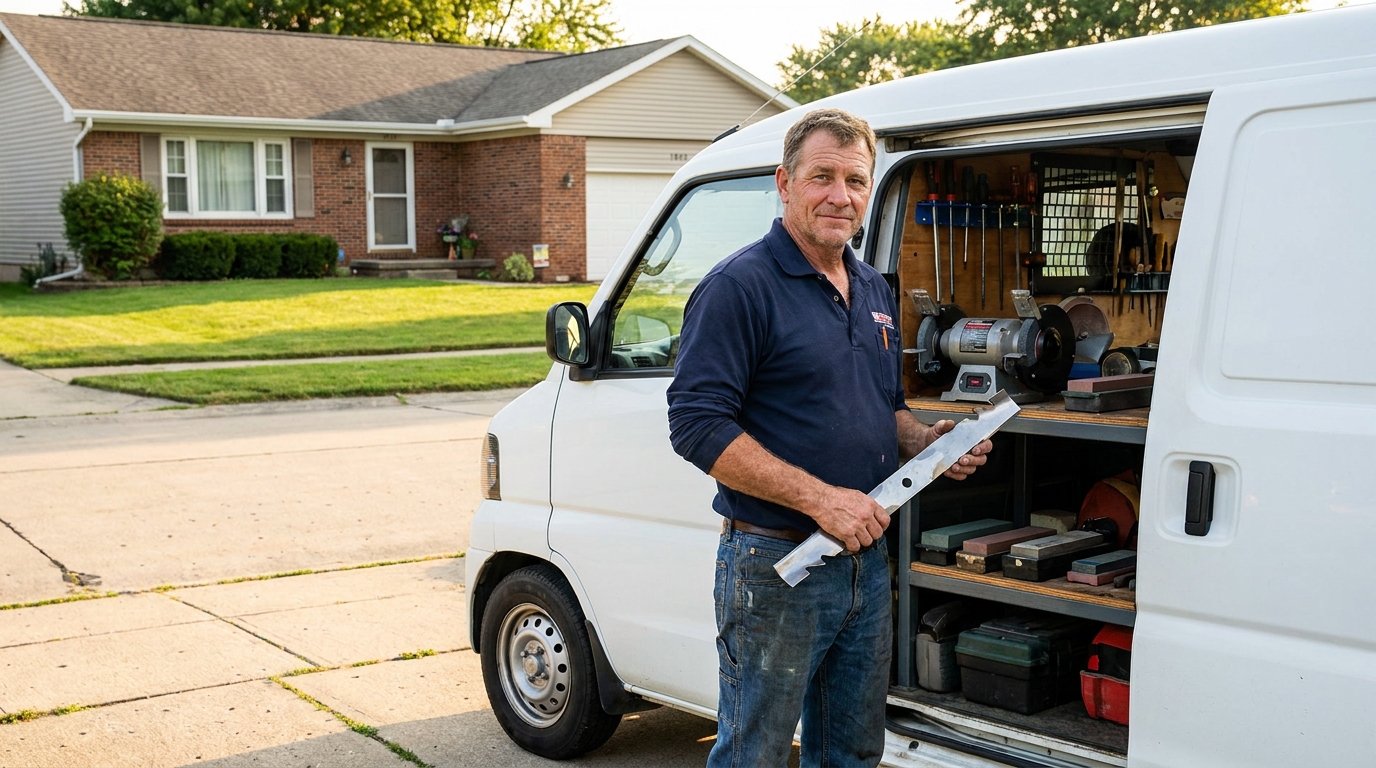
This mobile tool and mower sharpening service is a prime business idea for 2026, perfectly timed for a market that values sustainability and convenience. Consumers are actively shifting away from a disposable mindset, choosing to maintain and repair quality tools. Simultaneously, the demand for at-home services continues to surge. Homeowners will gladly pay for a professional who comes to their driveway, saving them the hassle of finding a specialty shop. You provide an immediate solution, sharpening everything from lawnmower blades and garden shears to chef's knives on the spot. This model is ideal for a solo entrepreneur, offering low overhead and a direct connection to the booming local service economy.
Your Mobile Workshop: Van and Equipment Essentials
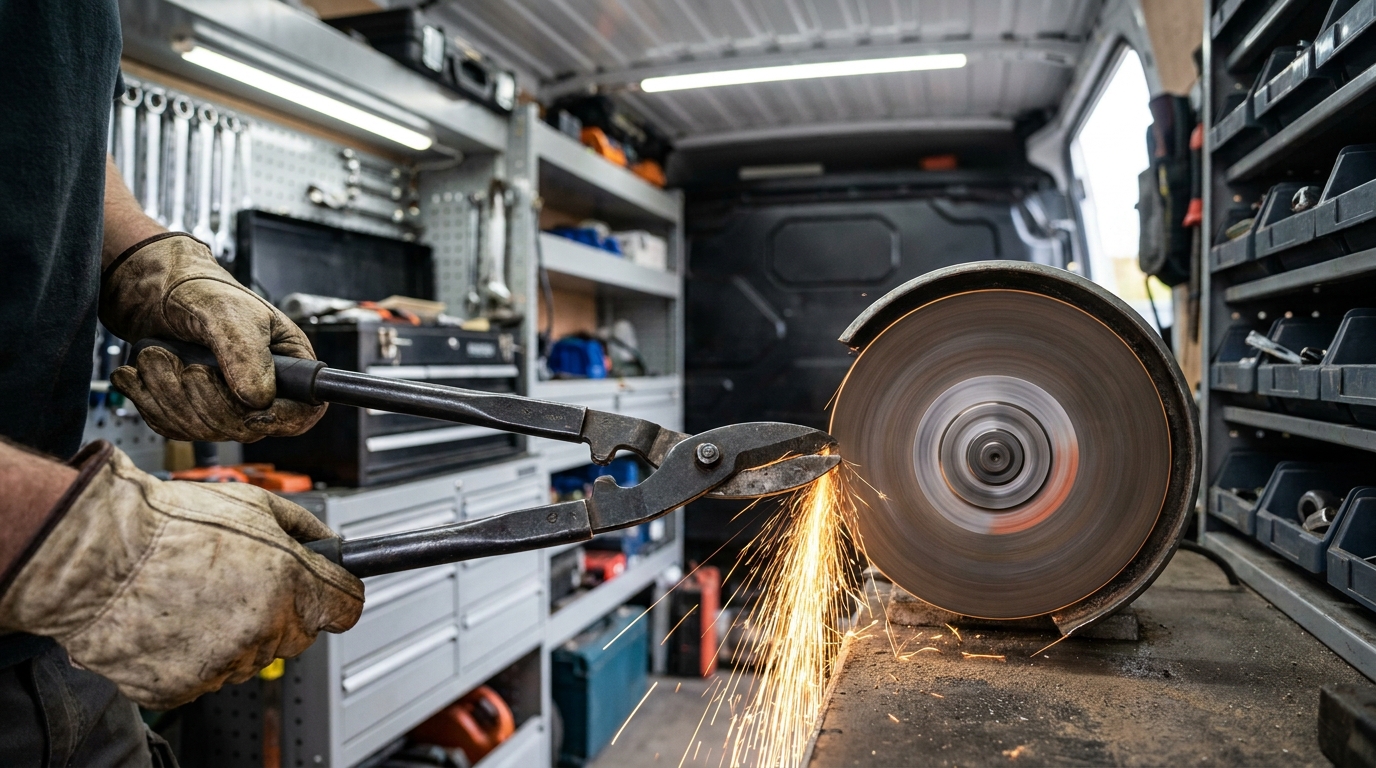
Your business is built around a reliable mobile workshop. A used cargo van like a Ford Transit Connect provides the necessary space without being difficult to navigate residential streets. Inside, a securely mounted workbench holds your essential equipment: a bench grinder for mower blades, a belt sander for precision knife and tool work, and various hand files. Power is critical; a quiet inverter generator or portable battery station allows you to work without disturbing the neighborhood. The initial investment is manageable. A dependable used van, all necessary equipment, and initial business setup costs can be budgeted in the $10,000 to $19,000 range, making this an accessible startup.
Defining Your Service Menu: From Garden Shears to Chef's Knives
A focused service menu simplifies marketing and operations. Start with two core categories. "Lawn & Garden" services provide a seasonal anchor, covering mower blades, shears, loppers, and hedge trimmers. This is a high-demand offering from spring through fall. "Kitchen Cutlery" sharpening provides consistent, year-round revenue. Home cooks often own expensive knives but neglect their upkeep, creating a steady market. By mastering these two areas first, you can build a strong reputation before expanding into more specialized items. This approach keeps initial equipment costs down and your value proposition clear to customers.
Smart Pricing for Maximum Profitability
Structure your pricing for clarity and profit. Price per item, not by the hour. A push mower blade might be $15-$20, shears $8-$12, and knives priced per inch ($1.50-$2.00). The key to maximizing revenue per stop is bundling. Offer a "Garden Tune-Up" (mower blade + 2 tools for $35) or a "Kitchen Set" (5 knives for $40). Crucially, implement a minimum service charge, such as $40 per visit. This ensures every trip is financially worthwhile and encourages customers to gather more items for you to sharpen. This model respects your travel time and reinforces the premium value of your on-demand service.
Neighborhood-Focused Marketing to Win Your First Customers
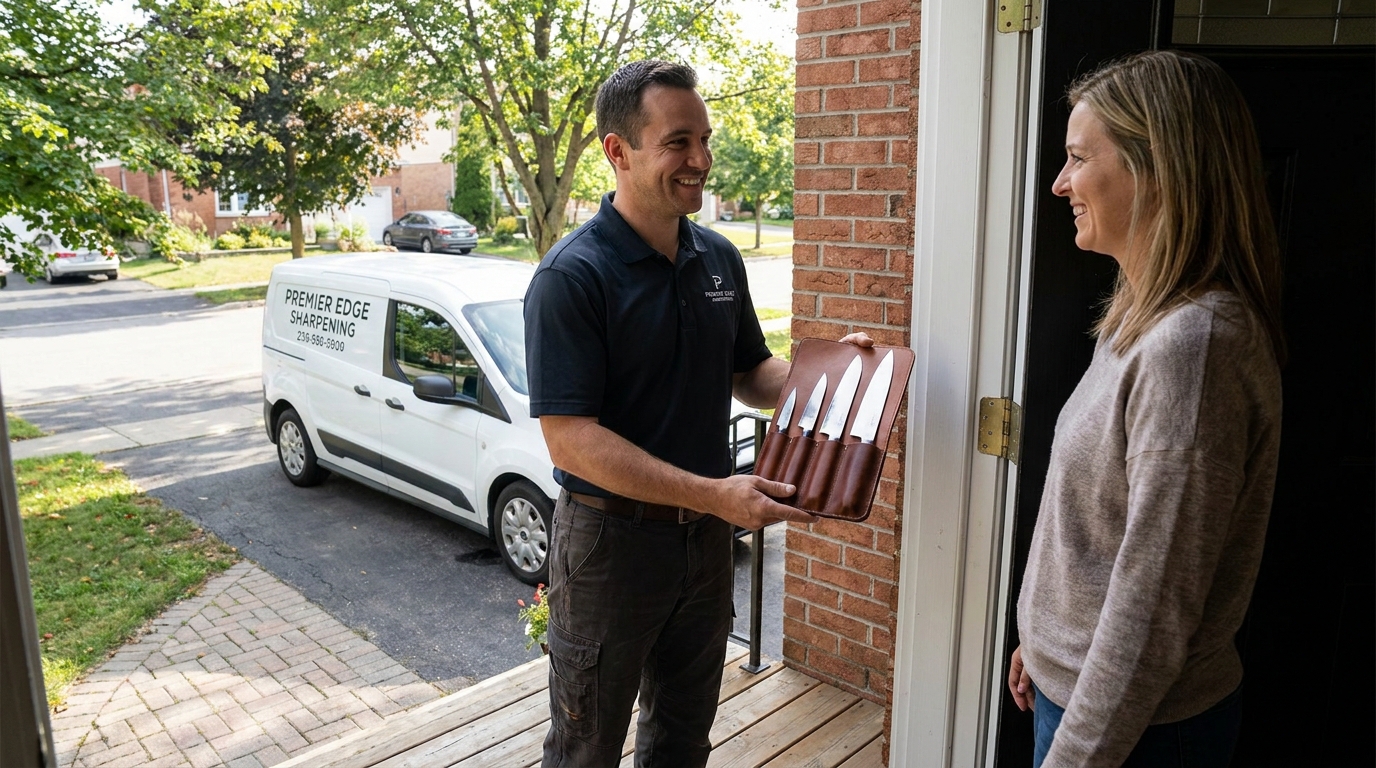
Your marketing must be hyper-local to support neighborhood clustering. Nextdoor is your most powerful tool; announce a "Sharpening Day" for a specific area to let neighbors book together. Local Facebook groups for towns and HOAs are also excellent channels. Supplement this with targeted door hangers distributed a week before your service day, featuring clear pricing and a QR code for booking. Getting your first three customers is straightforward: start with friends and neighbors for practice and reviews, post your launch on personal social media, and partner with a non-competing local service, like a mobile car wash, for cross-promotion. This builds initial momentum and social proof.
A Roadmap for Your First 14 Days
Execute a focused two-week launch plan. Days 1-3 are for administration: register your business, open a bank account, and secure liability insurance. Days 4-7 are for asset acquisition: purchase your van and equipment, then build out your mobile workshop. Use this time to practice on your own tools. On days 8-10, prepare for marketing by finalizing prices, ordering door hangers, and setting up a simple booking system like Calendly. Days 11-12 are for outreach: choose your first target neighborhood and post your service announcement on Nextdoor and Facebook. Finally, days 13-14 are for execution. Distribute door hangers, book your first jobs, deliver outstanding service, collect payment, and ask every happy customer for a review.
Future Growth: Scaling Your Sharpening Business
With a solid residential base, you can scale strategically. Begin by expanding to adjacent neighborhoods, replicating your successful hyper-local marketing. Then, target commercial clients for recurring revenue. Approach restaurants for weekly knife sharpening contracts and landscaping companies for seasonal servicing of their blades and tools. Introduce subscription models for homeowners, such as a quarterly kitchen knife service, to create predictable income. As demand grows, you can add a second van and hire a trained technician. You can also boost revenue per stop by selling complementary products like cutting boards or tool maintenance oils directly from your van.
Want more practical business ideas for the US market?
👉 Follow us on Facebook for daily ideas and tips.
👉 Save ideas on Pinterest — or get them by email.
Note: Comments are being moderated and may take a while to appear. There is no need to resubmit your comment.