How to Win Government Contracts with Zero Experience and Minimal Effort
Want more practical business ideas for the US market?
👉 Follow us on Facebook for daily ideas and tips.
👉 Save ideas on Pinterest — or get them by email.
Turn idea into action
Calculate a business plan for this idea
Log in to generate a plan from this idea. We will reuse the article's niche and context; you only add your market location.
Log in to calculateThe Easy Path to Government Contracts
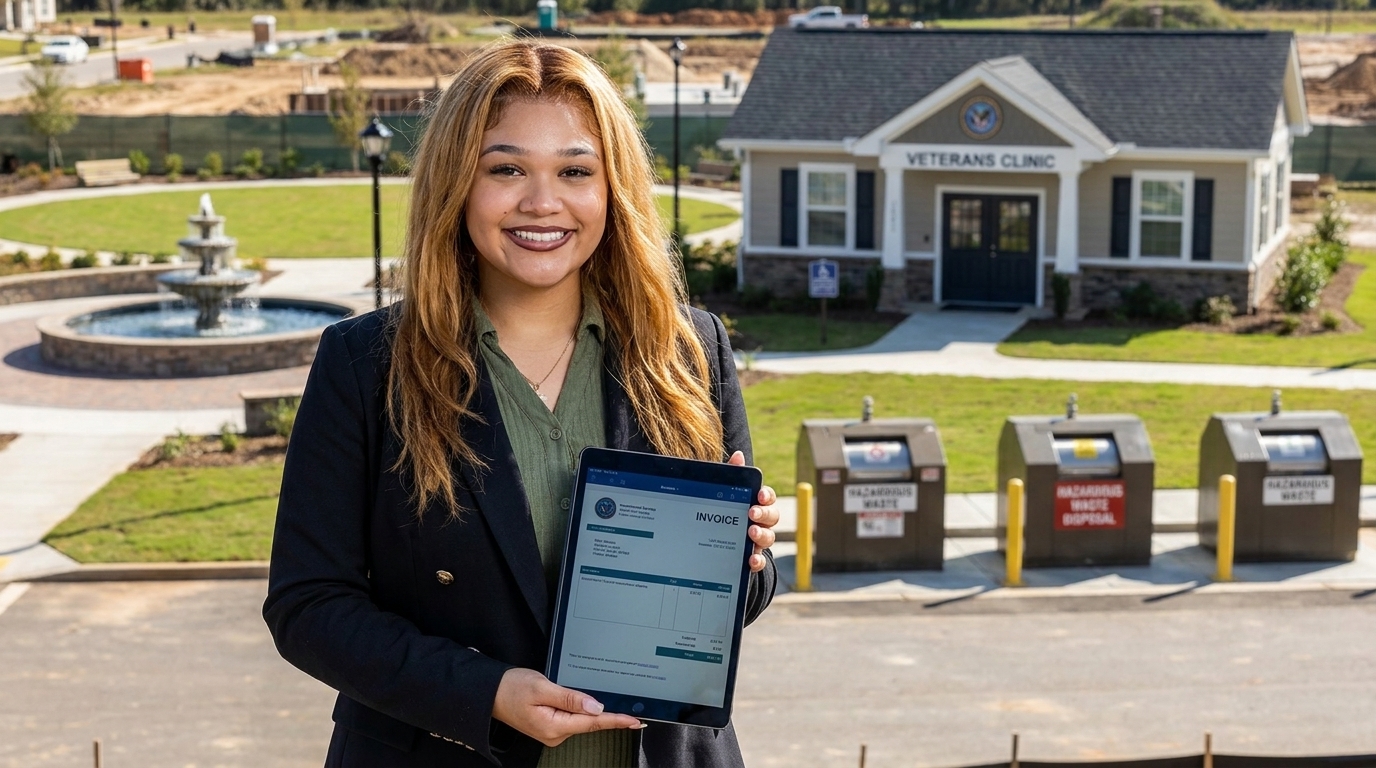
Natalie Rosario has discovered a remarkably efficient way to generate significant income by securing government contracts, often with minimal effort and no prior experience in the field. She recounts a scenario where her subcontractor charged her $41,000 for a job, and she, in turn, charged the government $52,000, netting an $11,000 profit in just two weeks. Her very first contract win, involving hazardous waste disposal, immediately highlighted the simplicity and profitability of this business model. This initial success led her to believe, "This is really easy." She emphasizes that the beauty of this approach lies in acting as a prime contractor, essentially a project manager, rather than performing the labor herself. This allows her to pursue diverse opportunities, from IT services to construction, without needing to be an expert in every domain. For instance, she might secure a landscaping contract for $75,000, find a local landscaping company to do the work for $50,000, and pocket a clean $25,000 profit for managing the process and ensuring compliance. The margins can be substantial, often ranging from 15% to 40% depending on the contract and the competitiveness of the subcontractor bids.
Leveraging AI for Contract Bidding
A key to Natalie's success lies in her strategic use of Artificial Intelligence (AI) tools for contract bidding. When asked if she uses AI for shortcuts, she readily confirms, "Yeah, that's how I won contract. I used Claude." These AI tools, she explains, can guide users through the entire bidding process, making complex government jargon understandable and helping to prepare comprehensive proposals. AI can analyze Request for Proposals (RFPs) in minutes, identifying key requirements, compliance mandates, and even suggesting optimal pricing strategies. It can draft compelling executive summaries, technical approaches, and past performance narratives, transforming a daunting task into a manageable one. This technological advantage allows individuals without specialized knowledge to sound intelligent and competent across a wide range of industries, from landscaping to hazardous waste disposal. "It's like having an entire team of expert proposal writers working for you 24/7, for a fraction of the cost," Natalie states. This significantly reduces the time and expertise traditionally required to compete for government contracts, leveling the playing field for small businesses and individual entrepreneurs.

Finding and Working with Subcontractors
Natalie's model doesn't require her to perform the actual work herself. Instead, she acts as a prime contractor, securing a government contract and then subcontracting the work to other businesses. For instance, if she wins a painting contract in Texas, she teams up with a local painting company. The process is straightforward: she gets paid by the government, then pays her subcontractor, keeping the difference as profit. This creates a "win-win" situation where her subcontractors gain work they might not have found otherwise, and Natalie earns revenue without needing to be physically present or have direct expertise in every field. Finding reliable subcontractors is a critical step. Natalie suggests leveraging online databases like SAM.gov (where many businesses register), GSA eBuy, local chambers of commerce, and even simple Google searches. Vetting involves checking references, verifying insurance, and assessing their past performance on similar projects. "I always get at least three quotes from subcontractors to ensure I'm getting a competitive rate and maximizing my profit margin," she advises. A typical profit margin on a subcontracted job might be 20-30%, meaning if a subcontractor charges $80,000 for a job, the prime contractor could bid $100,000, securing a $20,000 profit.
How to Get Started in Government Contracting
Natalie stumbled upon government contracting randomly through an Instagram story. Intrigued, she educated herself using YouTube and quickly became proficient in the basics. For anyone looking to replicate her success, the first concrete step is to register your business with the System for Award Management (SAM.gov). This is a mandatory, free registration that provides your business with a Unique Entity ID (UEI), essential for bidding on federal contracts. Next, identify relevant North American Industry Classification System (NAICS) codes that describe the services or products your business (or your future subcontractors) can offer. "Don't overthink it," Natalie advises, "just get registered and start exploring." She recommends setting up a basic business entity, such as an LLC, and creating a simple "capability statement" – a one-page document outlining your business's core competencies, past performance (even if it's just personal experience), and differentiators. These foundational steps are crucial for establishing credibility and preparing for your first bid.
Identifying Profitable Opportunities
Once registered, the next challenge is identifying profitable opportunities amidst the vast landscape of government solicitations. Natalie focuses on strategic searching. She primarily uses SAM.gov and GSA eBuy, filtering opportunities by NAICS codes, contract value, and set-aside categories. "I often start by looking for 'simplified acquisition' contracts, which are typically under $250,000," she explains. These smaller contracts often have less competition and are more accessible for new entrants. She also pays close attention to "set-asides" for small businesses, women-owned small businesses (WOSB), service-disabled veteran-owned small businesses (SDVOSB), and HUBZone businesses. These categories significantly reduce the pool of eligible bidders, increasing the chances of a win. Furthermore, Natalie looks for contracts that represent recurring needs, such as facility maintenance, IT support, or administrative services, as these can lead to repeat business. The key is to be selective, not to bid on everything, but to target contracts where a suitable subcontractor can be readily identified and a healthy profit margin can be secured. This focused approach minimizes wasted effort and maximizes the potential for lucrative wins.
Scaling Your Government Contracting Business
After securing initial contracts, the focus shifts to scaling the business for sustained growth. Natalie emphasizes building a robust network of reliable subcontractors. "Your subcontractors are your backbone," she states. "The more trustworthy and efficient partners you have, the more contracts you can pursue simultaneously." This involves actively seeking out new companies, building relationships, and having multiple options for each service type. To handle the increased administrative load, Natalie suggests leveraging virtual assistants for tasks like searching for bids, managing documentation, and communicating with subcontractors. Diversifying the types of contracts and the agencies you work with also contributes to scaling. Instead of specializing in just one service or one agency, she recommends exploring related NAICS codes and different government entities (e.g., Department of Defense, GSA, local municipalities). Crucially, every successful contract builds your "past performance" record, which is a vital factor in winning larger and more complex bids. Reinvesting a portion of your profits back into business development, such as professional training or advanced AI tools, further accelerates growth and expands your capacity to take on bigger projects, potentially moving into contracts worth millions.
The Untapped Market and Minimal Barriers
The government contracting market represents an enormous, often untapped, opportunity for entrepreneurs. With federal, state, and local governments spending trillions of dollars annually on goods and services, the demand is constant and diverse. Many individuals perceive government contracting as overly complex, requiring deep industry connections or substantial capital, which Natalie asserts is a myth. "The biggest barrier is often just the perception of difficulty," she says. The government actively encourages small business participation through various set-aside programs, aiming to award a significant percentage of contracts to specific business types. This means that, unlike the private sector, you often face a smaller, more focused competitive pool. There's no need for a massive marketing budget or extensive sales team; the contracts are publicly posted, and the government is actively seeking suppliers. With the right strategy – leveraging AI for proposals and subcontracting for execution – the barriers to entry are remarkably low, making it an ideal venture for those with zero direct experience but a strong entrepreneurial drive. It's a market ripe for disruption by agile, tech-savvy individuals.
Why Government Contracting is a Smart Move
For entrepreneurs seeking a stable, profitable, and impactful business model, government contracting stands out as a remarkably smart move. Firstly, the government is the most reliable payer in the world, ensuring a consistent revenue stream, even if payment cycles can sometimes be longer than in the private sector. Secondly, the prime contractor model allows for high-profit margins with minimal operational overhead. Natalie doesn't need to invest in equipment, hire permanent staff for every job, or maintain large facilities; her primary assets are her organizational skills, her network of subcontractors, and her AI tools. Thirdly, the work is often recurring and essential, providing a level of stability rarely found in other industries. Each successful contract also builds a valuable asset: a proven track record of past performance that makes future bids more competitive. Furthermore, by providing essential services to government agencies, you are directly contributing to public welfare and national infrastructure. It’s a business where you can achieve significant financial independence while simultaneously making a tangible difference, all without needing to be an expert in the field of execution. It’s a strategic pivot for anyone looking to build a resilient and lucrative enterprise.
Want more practical business ideas for the US market?
👉 Follow us on Facebook for daily ideas and tips.
👉 Save ideas on Pinterest — or get them by email.
Note: Comments are being moderated and may take a while to appear. There is no need to resubmit your comment.